Epigenetically
modified canicross activities.
Vivid post-exhaustion
philisophy.
It is
the terminal end of the running-season on snow-covered trails. It
isApril 17th and an anticipated thawing season has begun.
Once a year I like to test my physical condition by running an
insanely exhausting track. It starts off ascending steep, then
increasingly becoming steeper and steeper until reaching the top.
Usually I have no hope in my age to expect any progression, however I
want to be able to confirm that my capacity for running hasnt
declined. Today I took the test, a sunny day with a mild wind that
gave me the courage to do some extravaganza after a long winter. Nia
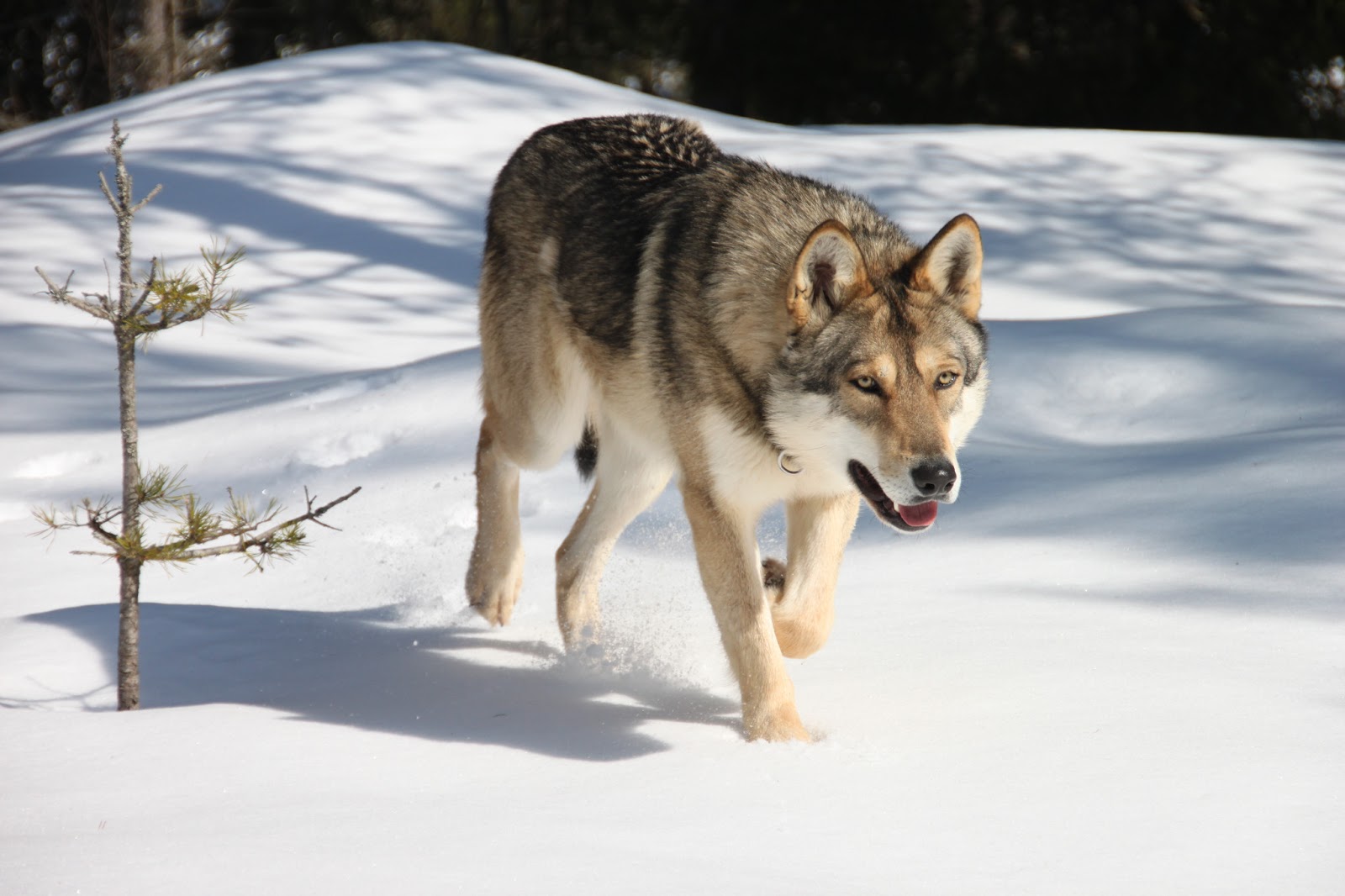
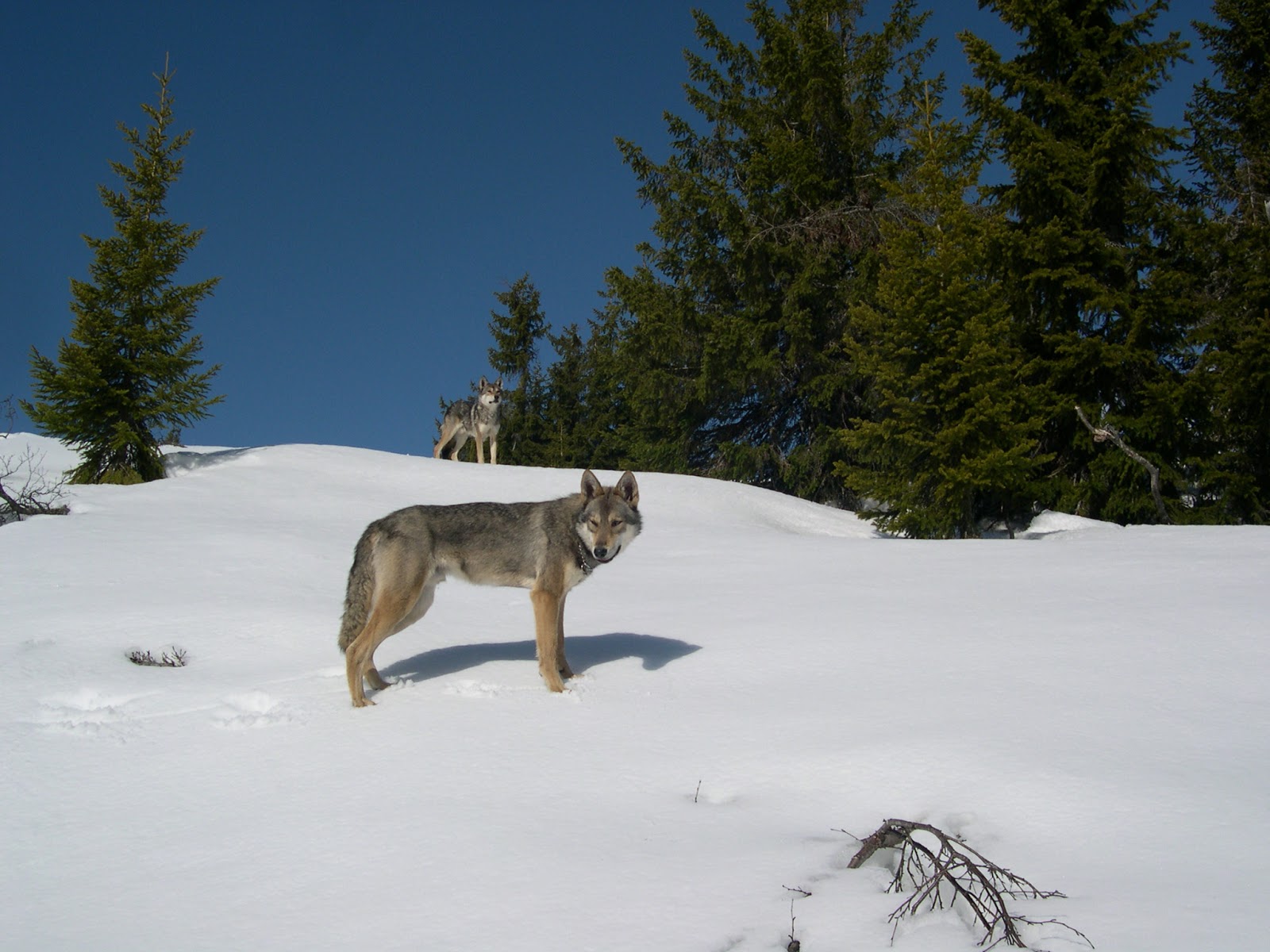
and Ulv were my running-mates on this trip. Unlike my other wolfdogs
who seem to settle on an even trotting speed which they are
unwilling to change, Nia and Ulv can be encouraged to both brake and
increase the speed during a run. They have a little
«husky-mentality» in that sense. The track starts climbing uphill
already at the first steps. Usually before reaching the top my
thighs ache, my lips become cyanotic, my vision become blurred, then
dizziness and a slight nausea makes a final addition to the exhausted
feeling. After reaching the top we continue downhill on the other
side reaching the lowest point of the trail only to make a similar
return back again.
Fascinated
by the new science of epigenetics I have done an experiment on myself
lately. For a year I have been running only in a catabolic state,
which means no less than 6 hours after the last meal. The last meal
never exceeds 15% of energy derived from glucose. In this way I
deprive myself of the glucogen stores over several weeks. As a
result I must fuel my muscles with fatty acids during a run.
Theoretically such stress to the metabolic entities in the cells will
lead to both intracellular and extracellular adaptations. Many of
which are epigentically changes in gene expression following by
transcriptions. Both enzyme production, number and size of
mitochondria and increased blood supply in my fatty tissue are
controlled by genes and can be changed through this adaptations.
Now,
back to my run today. Reaching the top this year with the usual ache
in my legs, but without the blurred vision, the dizziness and nausea.
Downhill on the other side seemed a little odd as I felt very light
in my body. Returning for the top the second time I felt
surprisingly at ease. Descending the final downhill was «euphoric»
experience. For the first time in years I had improved on this
sadistic run. Noramlly I would be stiff and painful arriving home
unable to walk normally, but today my vivid mind decided on another
run with the other pair of wolfdogs. We jogged an easy trail singing
joyfully at the same time. No pains, no exhaustion and a very happy
psyche!
During
this recovery run my mind also started to run with thoughts on
epigenetic changes in our wolfdogs. One of my wolfdog litters
produced 2 pups with inferior screeing results for dysplastic hips.
However both parents and all four grandparents had excellent hips.
Many disease processes beleived to be of genetic origin are now seen
in the light of epigenetics. Epigenetic mechanisms that alter gene
expression without affecting DNA sequence are now recognized as being
of great importance in our understanding of disease susceptibility.
Methylation of DNA, modification of histones, and interfering
microRNA collectively represents a cadre of epigenetic elements
dysregulated in chronic diseases. This is specially true in
polygenetically controlled processes such as hip dysplasia in dogs.
What can affect the development of a wolfdogs hips during its
development? The wolf was developed for running in the forests and
wilderness. Not at all on a paved road. The wolf was developed to
thrive on nourishment like prey animals with food frequency like once
every 3d day! What happens when a wolfdog puppy deprived of enough
natural exercise in rough terrain and instead is walked on a lead on
a paved road? Consider the importance of stress and the reaction to
stress as a stimuli for full growth. The scientific publication
«Nature» publised a review on a research on the ability to
metabolize starch in either dogs and wolves. The research concludes
that one of the genetically adaptations the domestic dogs have
developed is its ability to digest and metabolize starch. On the
contrary the wolf lack the enzymes necessary to utilize this food
source. Can we then expect to be safe with feeding our dogs of
recent wolfblood commercial dogfood consisting of a huge percentage
of starch ? And again; how does this affect the development of the
tissues around the dogs hips? We know that in humans the improper
digestion of certain carbohydrates can leads to inflammation and
systemic diseases. Maybe we must search for more than genes and
breeding in our approach to prevent such ailments as dysplastic hips
in our dogs.